
Get to Know Liqueurs
How to level up from mixed drinks and start making cocktails that feel like cocktails

There’s a difference between making mixed drinks… and making cocktails. And usually? The difference is in the liqueur. The desire to make that shift from one to the other tends to happen right around the time you graduate from your party phase and start wanting something that feels a little more elevated. Because vodka and juice get the job done… but orange liqueur in a Margarita? Coffee liqueur in an Espresso Martini? Amaro in a Paper Plane? That’s when drinks start tasting layered, balanced, and actually intentional. That’s when they stop feeling like alcohol in a red solo cup and start feeling like an actual cocktail experience.
Liqueurs add what your mixed drinks are missing: depth, bitterness, sweetness, aroma, texture, or complexity. They’re the ingredient that makes a drink taste finished, and thank goodness.
I know that this “category” can feel totally overwhelming. There are hundreds of bottles. Some cost $14. Some cost $60. Some taste great. Some taste… not so great. In this guide, we’ll break down:
What liqueurs actually are
What they do in cocktails
Which bottles are worth buying
What to avoid
Which classic cocktails rely on them
and how to make your own at home (!!!)
Let’s LIQUEUR!

So… What Is a Liqueur?

To keep it simple, a liqueur is a spirit that has been flavored and sweetened. Usually, this is with fruit, herbs, flowers, spices, coffee, nuts, or even citrus peel. I like to refer to them as “cocktail seasoning.” They’re rarely the entire drink, but without it, the drink is forgettable (or gross).
Some liqueurs are bright and citrusy. Some are bitter and herbal. Some are rich, nutty, floral, smoky, spicy, or deeply aromatic. Once you start recognizing what they bring to a drink, classic cocktails suddenly make a lot more sense. And then you’ll begin to notice that some of the world’s most iconic cocktails rely heavily on liqueurs…
A Margarita without orange liqueur is sharp. The citrus sweetness is what rounds it out.
An Espresso Martini without coffee liqueur loses its richness. Without it, you’re really just sipping on spiked coffee.
A Negroni is quite literally lost without Campari. Bright, bitter, herbal, and impossible to mistake for anything else.
Without Creme de Violette, an Aviation becomes tart instead of floral and delicious.
It’s beginning to make sense now, huh?! They are the ingredient that keeps the balance behind the scenes.
How to Shop For Liqueurs (Without Wasting Money)
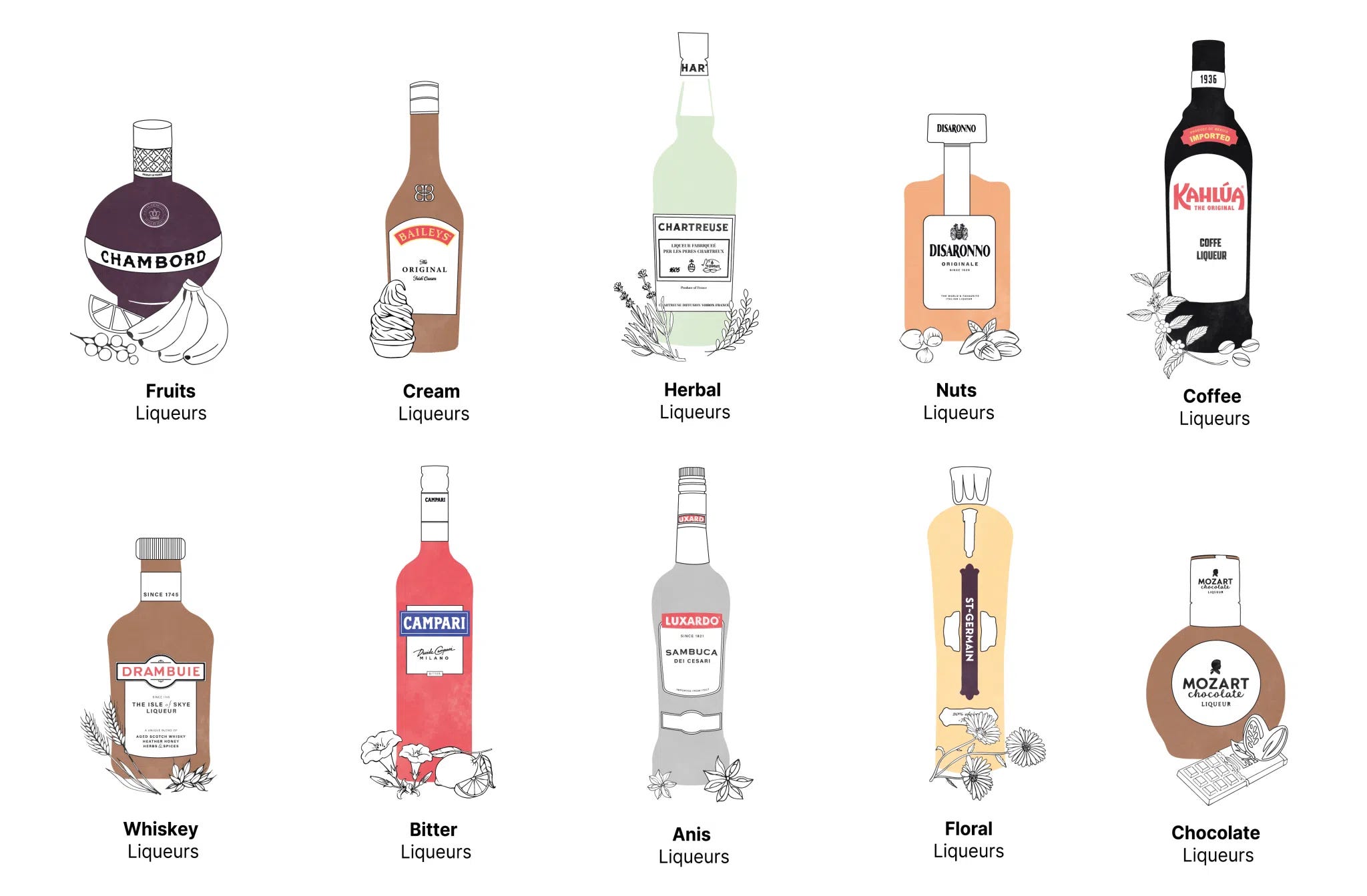
When you head to the liqueur section of your favorite liquor store, you might be overwhelmed. There will be hundreds of bottles. But don’t panic! Jules is here.
Unlike buying some spirits (like tequila or bourbon), the price of liqueur alone doesn’t always tell you whether or not the bottle is good.
What to Look For:
Look for Real Flavor: Real citrus. Real herbs. Real coffee. Real flowers.
Slightly Higher Proof: A lot of poorly made liqueurs are extremely low-proof and overly sweet, which makes them disappear once they’re mixed into a cocktail.
Pay Attention to the Label: As we’ve mentioned here many times before, a good producer wants you to know how the bottle was made. Transparency tends to correlate with quality! Look for things like botanicals, macerated peels, infused herbs, or natural ingredients.
What to Avoid:
Artificial Candy Flavor: Trust me on this one. This shows up a lot in melon liqueurs, sour apple liqueurs, blue curacao… and there certainly is a time and a place for these. If you’re building a classic cocktail, though, you’re going to want balance.
Syrupy Texture: If it’s looking a little too much like you’d use it to top your pancakes, leave it on the shelf. A good liqueur will feel alive and drinkable.
Now, which bottles should you actually buy first? I’ll tell you…
The Liqueurs Worth Buying First
If you’re building a home bar, you do not need thirty different bottles right away. And the odds are you don’t have the space for that either. But, not to worry! A few good liqueurs will unlock all sorts of classic cocktails for you. Here’s where to start:
Orange Liqueur (Cointreau, Dry Curaçao, Grand Marnier)
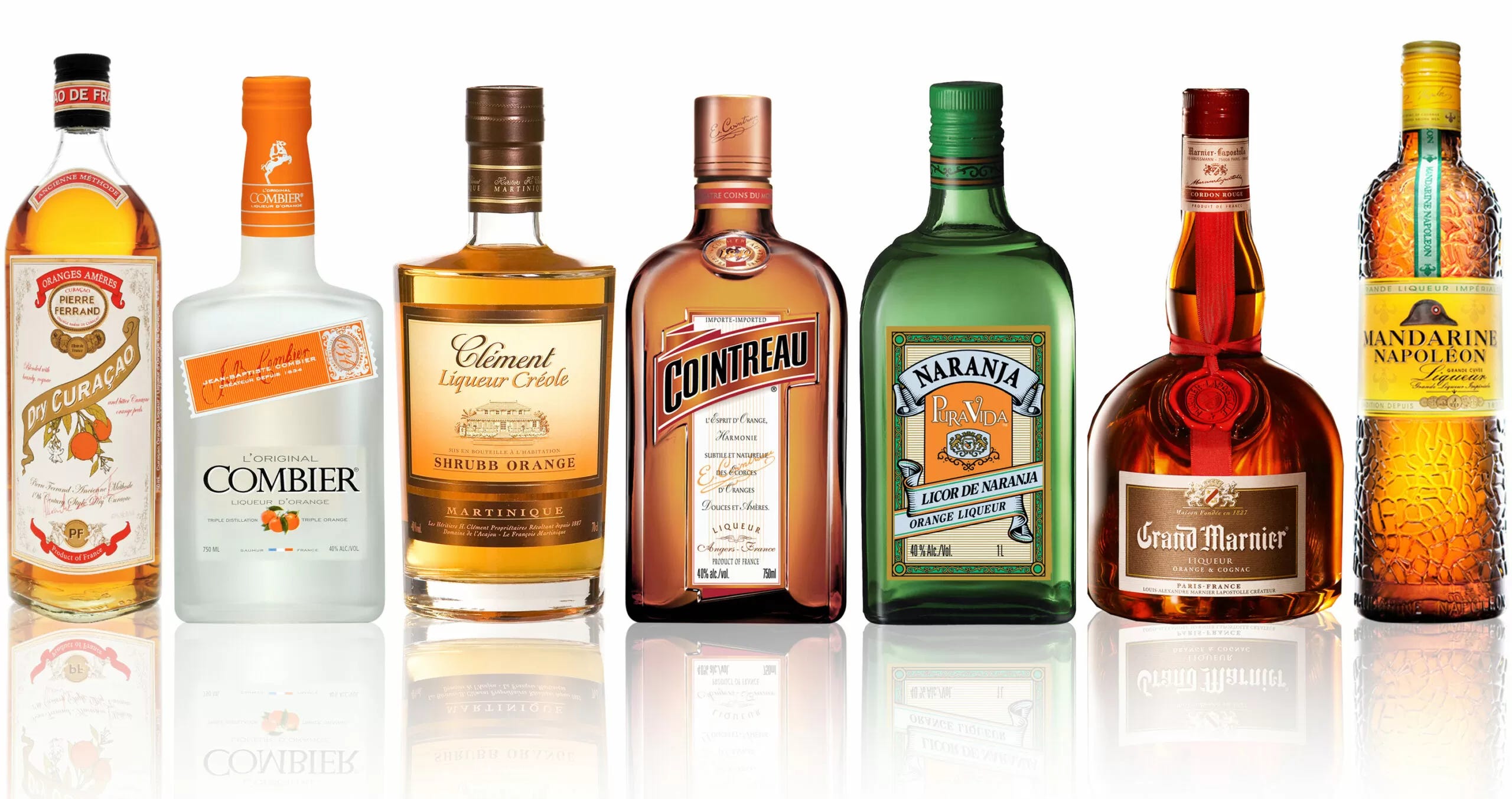
If you only buy one liqueur for your bar cart, make it orange liqueur!! It’s the backbone of:
Once you start using it, you’ll realize how many cocktails quietly rely on orange oils and citrus sweetness for balance. Cointreau is the clean, versatile classic. Dry Curacao adds more spice and depth. Grand Marnier leans richer and tastes a bit brandy-forward.
Italian aperitivi
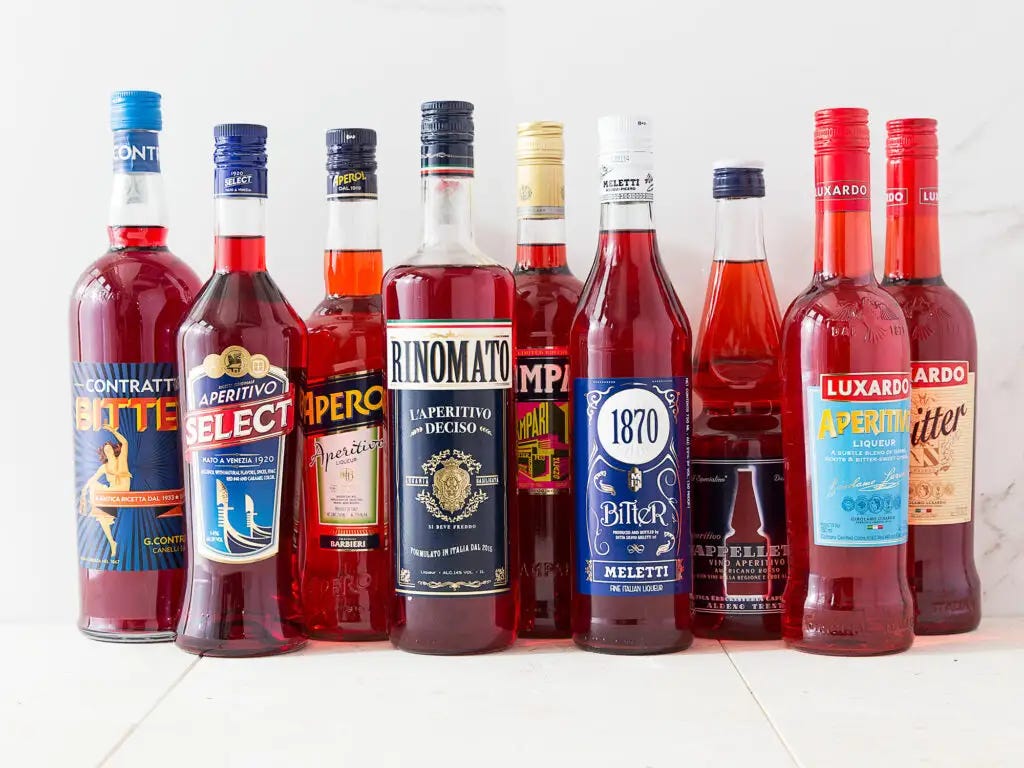
Campari, Luxardo Bitter, Contratto is where a lot of people discover they actually enjoy bitterness in cocktails. You know the taste if you’ve ever had:
It creates an unmistakable bitter and herbal flavor. Honestly, it can taste pretty intense at first, but before you know it, you’re craving it all the time.
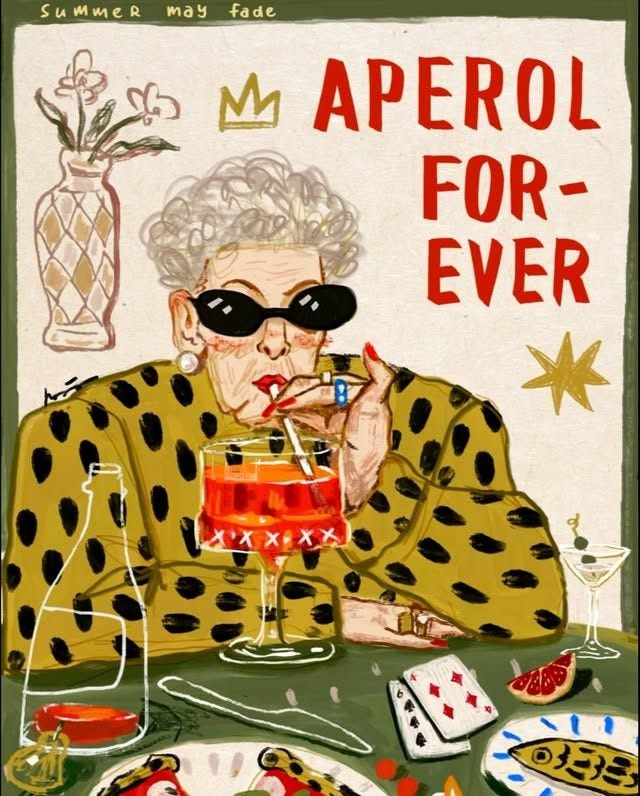
Aperol, Cappelletti, Luxardo Aperitivo, Select Aperitivo is Campari’s softer, cheerful, more outgoing cousin. It’s sweeter, lower-proof, and much easier for beginners to love. Aperol is essential for:
low-ABV cocktails
It’s one of the easiest bottles to reach for when you want something refreshing.
Coffee Liqueur
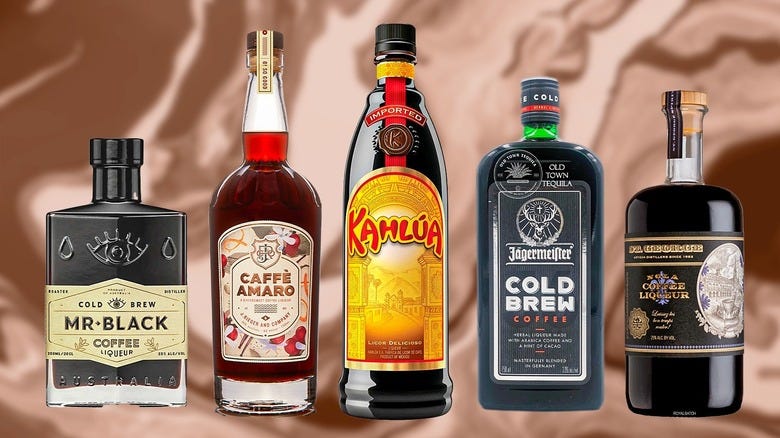
Coffee liqueur like Mr. Black, Mario’s, St. George instantly make cocktails feel rich and more indulgent. A good one should taste slightly bitter, but not too sugary or artificial. It thrives in…
Elderflower Liqueur
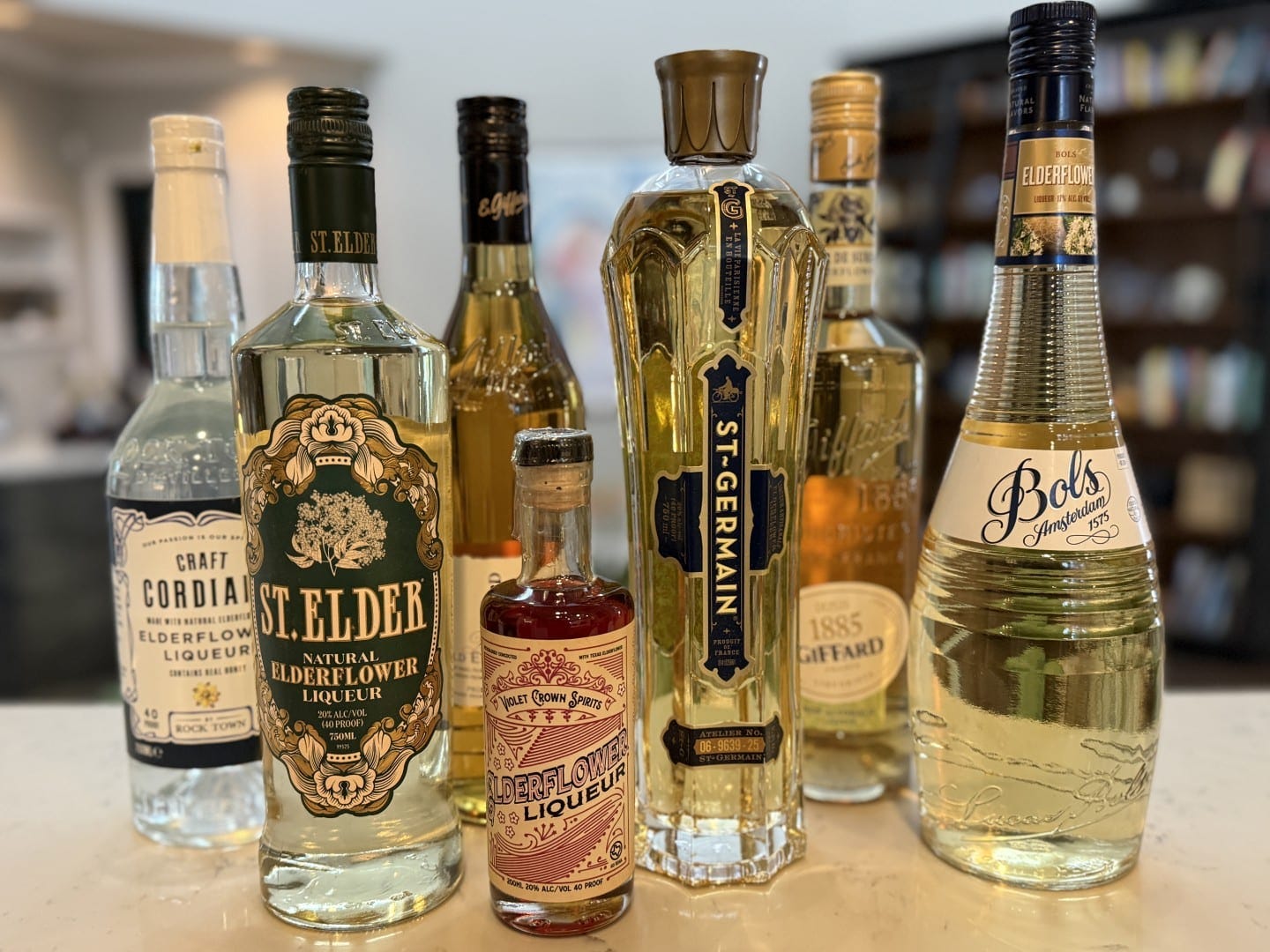
Elderflower liqueur like St. Germain, Drillaud, Fleur d’Ete is the bottle that makes people suddenly think you know what you’re doing (you’re reading this article, so you do!). It adds a floral sweetness and an aromatic lift to your drink. It works beautifully in:
gin cocktails
champagne drinks
lighter vodka cocktails
Grab a bottle of elderflower liqueur if you want to make a cocktail feel elegant.
The Bottles That Take You Deeper


Once you’ve got the essentials down, this is where cocktails start getting really interesting. These are the bottles that introduce bitterness, herbal complexity, spice, floral notes, and the kind of depth that makes a drink feel distinctly “cocktail bar” (not just homemade). They’re not necessarily the first bottles I’d recommend buying, but if you feel like you’ve made your way into medium-level home bartender territory, keep reading.
Amaro Nonino is usually where people fall in love with amaro. It’s warm, citrusy, herbal, slightly bitter, and approachable enough that it never completely takes over a drink. It’s what gives the Paper Plane its balance and richness, and it works in whiskey cocktails when you want something that feels a little more grown-up.
Paper Plane: ¾ oz bourbon + ¾ oz Aperol + ¾ oz Amaro Nonino + ¾ oz lemon juice
Montenegro is another easy entry point into the world of herbal liqueurs. It’s softer, more floral, slightly orange-forward, and super versatile in spritzes, Black Manhattan riffs, and lower-proof cocktails. Some people actually like to sip on it on its own.
Monte & Tonic: 2 oz Montenegro + tonic water + orange slice
Try other Amaros too, like: Cynar, Averna Amaro, Braulio, etc. There’s a whole wide world of Amaros if you know where to look… cough… cough… if you look past the Aperol and Campari…
Then there’s Luxardo Maraschino… one of the most important “bartender bottles” you can own. Spoiler alert, it doesn’t taste like maraschino cherries from the grocery store (dang it). It’s dry, slightly funky, nutty, and complex, and it’s the secret behind making a Last Word or Aviation taste so interesting.
Last Word: ¾ oz gin + ¾ oz Green Chartreuse + ¾ oz maraschino liqueur + ¾ oz lime juice
If you start exploring tiki cocktails, Falernum and Allspice Dram completely change the game. Falernum brings notes of lime, ginger, clove, and warm spice that instantly make rum cocktails taste more tropical, while Allspice Dram adds concentrated baking-spice warmth that feels almost tailor-made for darker spirits.
Corn ’n Oil: 2 oz dark rum + ½ oz falernum + lime juice + bitters
Lion’s Tail: 2 oz bourbon + ½ oz allspice dram + lime juice + bitters
Creme de Violette is one of the more delicate bottles in the category, but when used correctly, it’s magical! Just a small amount gives cocktails a soft floral aroma that makes drinks like the Aviation feel almost ethereal. Too much, though, and your cocktail can veer into perfume territory very quickly. You’ve been warned.
Aviation: 2 oz gin + ½ oz maraschino liqueur + ¾ oz lemon juice + crème de violette
Expert-Level / Cocktail Nerd Territory (Join Me!)


Eventually, if you stay in the cocktail world long enough, you reach the point where your bar cart starts looking slightly unhinged. In some cases… your bar cart turns into a bar closet or a bar room (I’m sorry, Eric). This is the territory that makes non-cocktail people stare at the label and say… “what even is that?” These aren’t necessarily everyday mixers.
Fernet-Branca is usually the gateway into this category. It has a reputation for being something people either hate immediately or slowly become obsessed with over time. Bartenders adore it, partly because surviving your first glass feels like a rite of passage.
Toronto: 2 oz rye whiskey + ¼ oz Fernet + simple syrup + bitters
Then there are Suze and Genepy… two bottles that taste like they were pulled straight from an apothecary. Suze is earthy and bitter and transforms spritzes and white Negroni-style cocktails. Genepy is softer and more aromatic, with mountain-herb energy that feels somewhere between Chartreuse and genuinely… fresh mountain air.
White Negroni: 1 oz gin + 1 oz Suze + 1 oz Lillet Blanc
Alpine Last Word: gin + Genepy + maraschino liqueur + lime juice
Nocino takes things in an entirely different direction. It’s dark, rich, earthy, and slightly bitter (it’s made from walnuts!). It works best in stirred whiskey cocktails, espresso drinks, and after-dinner cocktails.
Walnut Old Fashioned: bourbon + nocino + bitters
Absinthe and Pastis are probably the most misunderstood bottles in the cocktail world. They’re rarely used in large quantities, but even a rinse or a few drops can completely reshape a cocktail. Keep your eyes peeled for the green fairy!
Sazerac: rye whiskey + absinthe rinse + sugar + Peychaud’s bitters
Mauresque: pastis + cold water + orgeat
Benedictine and Drambuie bring an old kind of complexity. Both make cold-weather cocktails feel complex.
Vieux Carré: rye whiskey + cognac + Benedictine + sweet vermouth + bitters
Rusty Nail: Scotch whisky + Drambuie
And last, there’s Chartreuse: one of the most iconic cocktail liqueurs ever made. Green Chartreuse is bold and punchy, while Yellow Chartreuse leans softer and slightly sweeter, but both add a level of complexity that’s hard to replicate with anything else.
Chartreuse Swizzle: Green Chartreuse + pineapple juice + lime juice + falernum
And then there are the wonderfully weird modern bottles
Italicus with its bright bergamot citrus
Italicus Spritz: Italicus + prosecco + olives or grapefruit
Ancho Reyes with smoky chile warmth
Spicy Margarita: tequila + lime juice + orange liqueur + Ancho Reyes
Licor 43 with vanilla and baking spice
Carajillo: Licor 43 + espresso
and the list goes on and on!!!
Guys… this is when your cocktails stop tasting like you followed a quick recipe, and start tasting personal. Congratulations, you’ve just stepped into the most fun territory yet!
How to Make Liqueur at Home


One of the best ways to understand liqueurs is to make them yourself. Most of them follow the same simple formula. Here’s what you’ll need:
2 cups of a spirit of your choice
flavoring ingredients
1/2 - 1 cup of sweetener
Then, you infuse, strain, sweeten, and bottle. That’s it! I’ve included recipes for Coffee Liqueur, Strawberry Basil Liqueur, and Vanilla Cinnamon Liqueur below for you all. Let me know if you try them!
