Cocktail 101: You're Overthinking It
The basics, the myths, and what actually matters when you’re making drinks at home.


I’m not sure when this happened, but somewhere along the way, the world of cocktails has become a little intimidating. It seems like people feel the need to stock their home bar with twelve obscure liqueurs, every fancy tool around, and build a full speakeasy setup to make a decent drink at home. What’s funny is that most great cocktails are really just a balance of spirit + citrus + sugar + dilution.
Once you actually understand the basic structure of cocktails, everything starts to feel a lot less random (and a lot less intimidating). You stop memorizing recipes and start understanding why drinks actually work.
I realized it’s been a minute since I’ve talked about the actual basics. I’ve been feeling inspired to put together more deep dives on specific spirits - but honestly, what a lot of us really need is just a solid guide to cocktails in general! So… this is Cocktail 101: the basics that actually matter, the mistakes almost everyone makes, and the easiest ways to make your drinks taste better at home.


Looking to stock up on the basics? I’ve got everything you need for your home bar here!

If you really want to immerse yourself in cocktail culture, one of my favorite industry events is Bar Convent Brooklyn, and it’s almost here! Some of the best bartenders, brands, educators, and beverage professionals in the industry all get together for tastings, education, and the best conversations. It is a trade-only event, which means you have to be a qualified bar and beverage industry professional (and obviously, over the age of 21). I’d love to see you there! Use the code JoinJules25 for 25% off tickets!
Now, let’s learn how to really speak the language…
Cocktail Terms People Pretend To Understand
Cocktail culture loves terminology. Half the time people nod along like they totally know what’s happening, while internally they’re thinking: “… huh?” Here’s the cheat sheet:
“Up” - Served chilled, but without ice in the glass.
Usually served in: coupes. martini glasses, or Nick & Nora glasses
You’ll hear this when it comes to martinis. A Martini served “up” is cold and silky, but not sitting on ice getting diluted over time.
“Neat” - Straight spirit, no ice, no chilling. Just poured directly into the glass.
Usually: whiskey, tequila, mezcal, or rum
This is basically the cocktail world’s version of “no distractions,” and a great way to grow a little hair on your chest!!
“On the Rocks” - Served over ice. That’s it. That’s the whole thing.
But the type of ice actually matters more than people realize. A giant cube and sad fast-melting fridge ice create two VERY different drinks. More on that later…
“Dirty” - Usually referring to olive brine in a Martini.
Extra dirty = more brine.
Filthy = chaos (but in the best way.
“Dry” - Honestly, this one confuses almost everyone. It means less vermouth.
… which feels backwards because vermouth itself isn’t “dry” in the way people think of dry wine. This is where I’d like to reiterate that cocktail terminology is weird.
“Wet” -The opposite of dry. More vermouth.
Usually softer, smoother, and honestly underrated.
“Expressed Citrus” - When you twist a citrus peel over a cocktail to release the oils onto the surface of the drink.
This tiny step makes an enormous difference because aroma is part of flavor. The smell hits before the sip does.
“Double Strain” - Using both a Hawthorne strainer and a fine mesh strainer while pouring.
This removes: citrus pulp, herb bits, tiny ice shards, or anything else of concern. The result is a smoother, cleaner texture.
“Built” - Made directly in the serving glass instead of a shaker tin.
Examples of this would be a gin & tonic, ranch water, whiskey soda, or highballs. Minimal effort, but still tasty.
“Muddled” - Pressing ingredients to release flavor.
It’s usually herbs, fruit, or sugar cubes. I want to call out, this should be gentle. I’ve seen far too many people obliterate mint like they’re angry at it, which can result in a grassy finish instead of a fresh one. Gentle.
“Float” - When an ingredient is layered gently on top of the drink instead of fully mixed in.
Think cream, dark rum, red wine. It’s partly flavor, but often more so presentation.
“Riff” - A variation on an existing cocktail.
Cocktail people LOVE saying this, and love making these... Me, I’m talking about me. A Mezcal Negroni? A riff. A spicy Margarita? A riff. Most modern cocktails are honestly just riffs on classics.
“Balanced” - Nothing overwhelms anything else in the drink.
Most great cocktails are really just a balance between spirit, acidity, sweetness, & dilution. That’s the whole game.
Get To Know The Family Tree
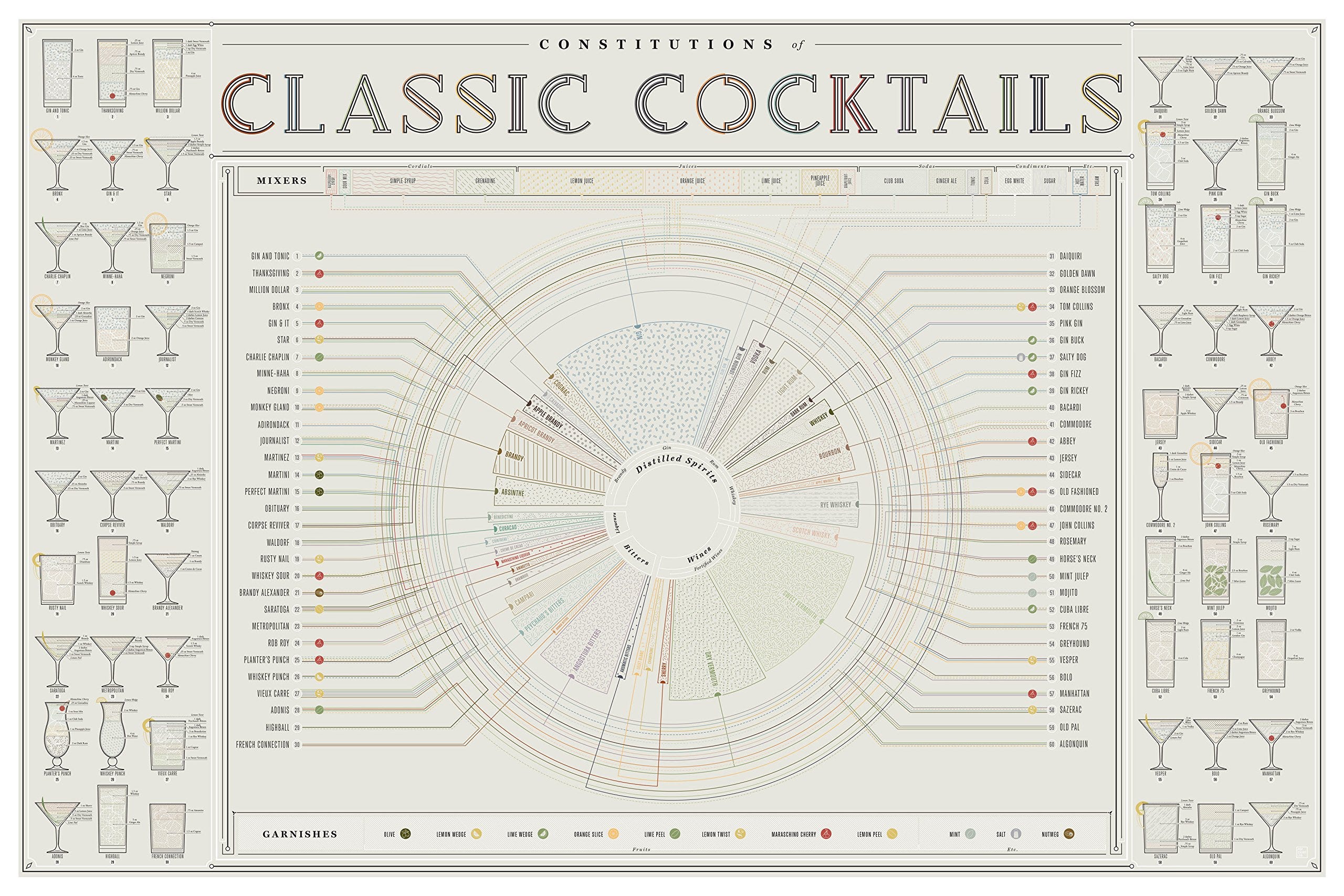
Once you understand cocktail “families,” you stop memorizing recipes and start recognizing patterns. And as I said, most classic cocktails are just variations of a few formulas that have existed forever. This is also the moment where making drinks at home becomes significantly less intimidating because you realize you probably already know more than you think you do.
The Sour Family
This is probably the most important cocktail family to understand because SO many drinks live here. At its core, the formula is basically: spirit + citrus + sweetener. That’s really it.
Margaritas, Daiquiris, Whiskey Sours, Sidecars… they all live here. The balance (look, we’re already using so many of these words) just shifts depending on the spirit, citrus, or sweetener being used.
This is also where people usually realize cocktails are less about strict recipes and more about proportions. Too much citrus… a drink tastes sharp and aggressive. Too much sugar and it falls flat. This is why it can be so important to taste while you go! This is also why fresh citrus matters so much. In drinks like these, bottled lime or lemon juice stands out immediately.
Spirit-Forward Cocktails
These are cocktails where the alcohol itself is the star. Less citrus, less juice, more emphasis on texture, dilution, aromatics, and temp. So our martinis, manhattans, negronis, and old fashioneds.
These drinks are usually stirred instead of shaken because the goal is a smoother, silkier texture (instead of aeration). This is also where people start realizing how much tiny details matter (a lot!!!). The temperature of the glass matters. The ice matters. Dilution matters. A warm Martini and an ice-cold Martini are genuinely two completely different experiences.
Highballs
They’re long, refreshing drinks built with spirit and carbonation… your gin & tonics, ranch waters, Moscow mules, whiskey sodas, and palomas.
People assume these are impossible to mess up because they seem “simple,” which can be true, but they depend heavily on quality ingredients. Good carbonation, cold mixers, and proper ratios make a huge difference when there are only two or three ingredients involved.
The Main Thing to Understand
Most cocktails are not completely original inventions. They’re riffs on existing structures. Now that you have a better understanding of cocktail families, can you see how they’re a little less complicated? This is how good bartenders can improvise so easily. They aren’t memorizing thousands of drinks. They’re recognizing patterns.


One last thing to note: the Cocktail Codex Approach
One of the most interesting modern cocktail books is Cocktail Codex, which argues that almost every cocktail can be traced back to six foundational “root cocktails.” Instead of memorizing hundreds of recipes, the idea is that once you understand the structure of these families, you can start understanding why cocktails work and how to riff on them confidently at home.
The Six Root Cocktail Families
Old Fashioned
Spirit + sugar + bitters. Spirit-forward, simple, and one of the oldest cocktail structures there is.
Martini
Spirit + fortified wine or bitter modifier. This family includes cocktails that are more aromatic, herbal, botanical, or bitter-forward, like Martinis, Manhattans, and even Negronis.
Daiquiri
Spirit + citrus + sweetener. Bright, balanced, and honestly the foundation of a huge portion of modern cocktails, including Margaritas and Whiskey Sours.
Sidecar
Spirit + citrus + liqueur. Similar to the Daiquiri family, but with added complexity and richness coming from liqueurs instead of simple syrup alone.
Highball
Spirit + carbonation. Simple on paper, surprisingly dependent on quality ice, temperature, dilution, and good mixers.
Flip
Spirit + sugar + egg or dairy. Rich, silky, textured cocktails that lean dessert-adjacent and emphasize mouthfeel just as much as flavor.
I love this framework because it makes cocktails feel less intimidating. Once you recognize the structure, bartending starts feeling a lot more like cooking: learning techniques instead of memorizing recipes.
Ice Ice Baby
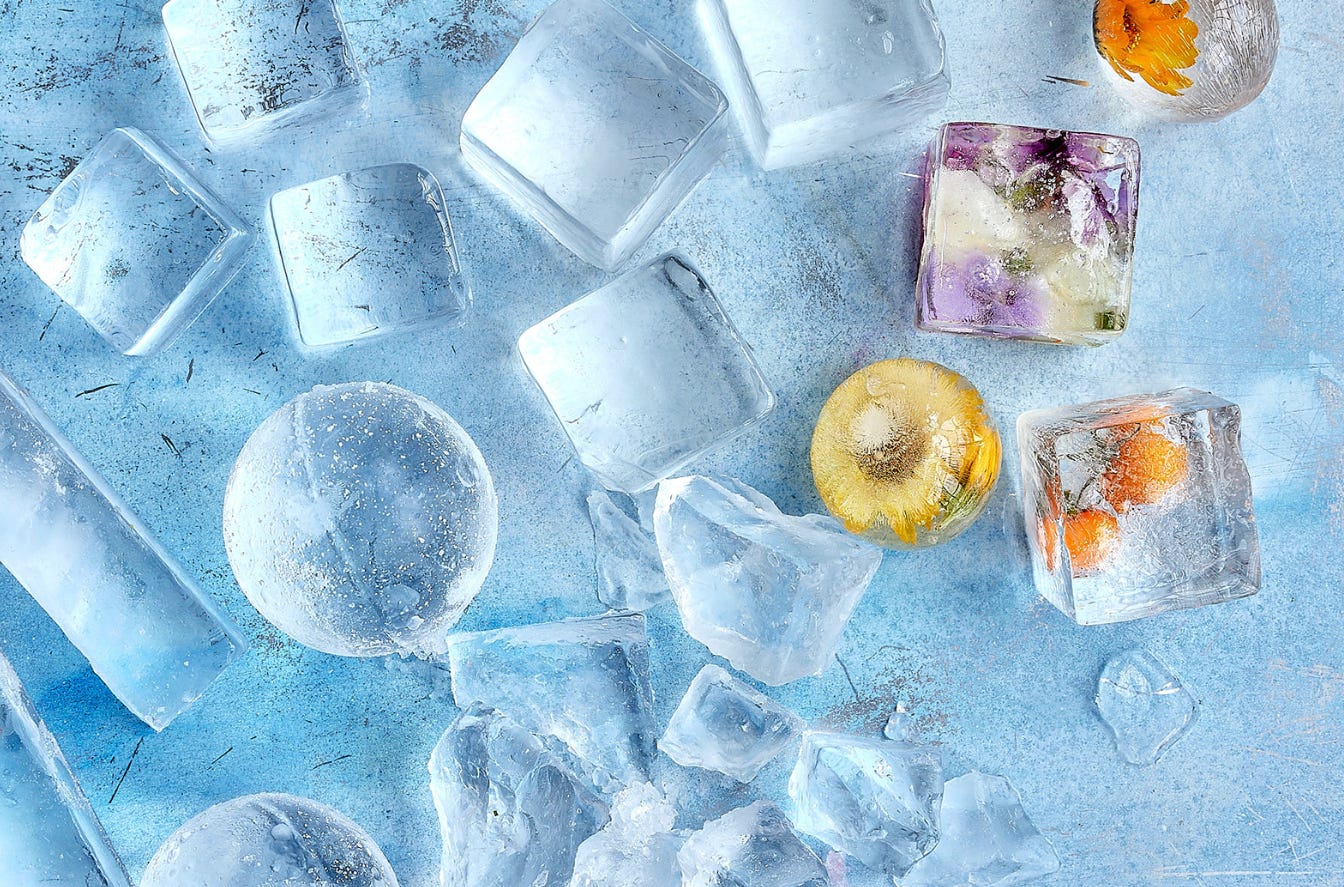
Ice is one of the most overlooked parts of making cocktails at home. People will spend $70 on a beautiful bottle of whiskey and then throw it over cloudy freezer ice that smells faintly like frozen leftovers (criminal!!). One of the biggest reasons cocktails taste so good at bars has nothing to do with “secret ingredients” and everything to do with this!!
Ice affects texture, temperature, dilution, appearance, and even aroma. And, it’s important to note: dilution is often a good thing! A cocktail that hasn’t been diluted enough can taste sharp or disjointed. Water is part of the recipe, whether people realize it or not. The goal is to control the dilution. You want just enough to open up the drink without completely watering it down.
Product highlight: if you want to make signature clear ice at home rather than buying the bags (I love Penny Pound ice) you should really consider KLARIS (I have the mini + the OG size and love both!!)
Shaken or Stirred
They’re not just theatrics. They control temperature, texture, and how much water gets incorporated into the drink. You’ll want to shake drinks with citrus, dairy, egg whites, or juice. Stir drinks that are spirit-forward, booze-only, or clear. This is why a shaken martini and a stirred martini are such different experiences.
Large Cubes vs. Crushed Ice
Large cubes melt more slowly, which means slower dilution. They’re ideal for spirit-forward cocktails like old fashioneds, negronis, or manhattans, where you want the drink to stay cold without changing too quickly.
Crushed ice does the opposite, and that’s the point. In drinks like juleps, tiki cocktails, or tropical drinks, you want the dilution so your drink evolves as you drink it.
My Tiny Ice Pet Peeve
One thing that rarely works: shaking a cocktail with one lonely cube. You need enough ice for movement, chilling, and proper dilution. Small amounts of ice melt too quickly and usually leave drinks both watered down and somehow still not cold enough. It feels like a personal attack every time it happens.
Before buying seventeen obscure amaros you’ll use once every eight months, invest in better ice trays. Good ice and cold ingredients will improve your drinks faster than most expensive bottles ever will.
The Biggest Mistakes People Make at Home
Most bad cocktails at home come down to a few very fixable things. We’ve already touched on a few of these, but let’s review. How many of these mistakes have you made?
Overcomplicating cocktails: You do not need fourteen ingredients and a smoke gun to make a good drink. Most classic cocktails are built on very simple formulas. If you’re struggling… try the classic Daiquiri and watch the balance speak for itself!
Buying too many bottles too quickly: Before buying obscure liqueurs you’ll use once a year, focus on staples and learn how they work across different cocktail families.
Using bad ice: Good ice genuinely changes everything.
Not tasting as you go: Citrus varies. Sweetness varies. Your preferences vary. Cocktails are adjustable!
Ignoring temperature: Cold glassware, cold ingredients, and enough ice make drinks taste significantly better.
Shaking or stirring everything the same way: Are you going for smooth? Think about the texture you’re hoping for.
Using bottled citrus: Don’t even try. Not on my watch. If it’s not fresh… WE DON’T WANT IT!
Thinking simple means boring: Some of the best cocktails in the world are only three or four ingredients. (I’m looking at you Old Fashioned)
The good news is we’re now slightly more educated, significantly less intimidated, and hopefully reconsidering the state of our freezer ice. Now let’s talk about what you actually need to build a solid home bar setup (without buying half the liquor store).
Your Home Bar Essentials
Now that we’ve covered the basics, here’s what you actually need to start making great cocktails at home. You don’t need a ton! Just start with the basics:
If you’re just starting out, I recommend this full set from Foretssa. And please, promise me this… get your ice right.
I’ve put together all of my favorite cocktail tools and my favorite glassware.
There are always a few lingering questions that come up once you actually start making drinks. Let’s cover those, too, and if I missed any, just ask them in the comments!
A Few More Questions People Always Ask
What’s the difference between a cocktail and a mixed drink?
Okay, technically, all cocktails are mixed drinks. But not all mixed drinks are cocktails. A rum and coke? Mixed drink. A daiquiri? Cocktail. The difference really comes from what we discussed above. A cocktail involves balance, structure, and intention… while a mixed drink is just a spirit and any old mixer.
Do I really need a jigger? Can’t I just eyeball it?
Eventually, you’ll probably get to the point where you can eyeball it, but for now… yes, you need a jigger. Consistency matters!
Is vermouth supposed to go in the fridge?
YES. Vermouth is wine-based and oxidizes after opening. If someone hates the martinis you’re making, its pobably because you left an open bottle of vermouth in the liquor cabinet instead of the refrigerator.
A good rule of thumb when it comes to determining what needs to be refrigerated is if a bottle is wine-based, lower ABV (under 20%), or floral/fruity… it’s probably happiest in the fridge after opening.
What’s the difference between tequila and mezcal?
Fortunately for you, I recently put together a Tequila Guide and a Mezcal Guide that thoroughly break down the differences. But essentially, the difference comes from the agave plant used and the roasting. Tequila must be made from blue weber agave in identified specific regions, while mezcal can use many agave varieties and gets its smoky taste from underground roasting.
Why are egg whites used in cocktails?
Texture. They create foam, body, and a silky mouthfeel. I promise, they don’t make the drink taste eggy when it’s done right. Don’t be afraid of it.
That’s it, you guys! Nothing overly complicated. Nothing you need a bar degree for. Just a handful of basics that make everything else start to make sense. Now, get out there and make me proud!